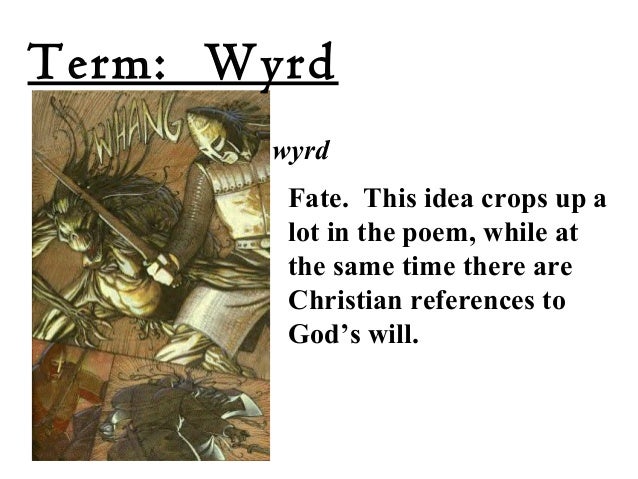
Do you believe events in your life have been guided by fate or chance? Why or why not? Based on the text, what do you think Shakespeare's attitude was towards fate? Does Macbeth have any choice in his actions or was everything predetermined? Use examples from the text as your support.
If there is such a thing called "fate", then I will not wholly agree on its existence. "Fate", for instance, implies that there are other factors one cannot control; therefore, something to blame. An intelligent man could be working at McDonalds, yet say, "I think it's fate that I'm supposed to not progress in the business world," and carry on his ways in the fast-food industry. That isn't fate, that's laziness. And applying it to my life, too, would be redundant, because I chose everything I did and everything I do. I went to work this morning, came home, and ran. I chose to go to work, I chose to come home, and I chose to run. If "fate" was in control of anything I did today, then "fate" is in control of everybody's mind.
So was it "fate" in Shakespeare? Did he believe in it?
I think that in hindsight, Shakespeare didn't believe in "fate". He grew up during the time period when supernatural related activity and religion were two large components of life, but he doesn't display it in his plays. He seems skeptical of it. For example, in Romeo and Juliet, the two kids want to be together, but it's the choices that each make to be together that end up falling a part.
These choices are similarly used in Macbeth.
In Macbeth, Shakespeare presents the supernatural activity as an incident that may or may not have happened; he challenges the views of the society. And when he does this, he focuses on the "thoughts" of the characters.
Act
I, scene III presents the three "witches" expressing their views on
the future regarding Macbeth.The third witch sings, "All hail Macbeth, thou shall be king hereafter". What the "witch" says is not
a prophecy, but rather a representation of an idea that could come true. And in
Act I, scene VII, Macbeth challenges this idea of being king by wondering if he
should murder Duncan, the present king of Scotland. Macbeth says," First,
as I am his kinsman and his subject, Strong both against the deed; then,
as his host,Who should against his murderer shut the door,Not bear the knife
myself. "
Here, he questions why he shouldn't kill the king. However, greed
wins him over. Macbeth finishes his monologue by saying, "I have no spur to prick the sides of my intent, but only vaulting ambition, which o'erlaps itself and falls on the other". Macbeth concludes that he is far happier as king and desires it more than his loyalty to Duncan. Therefore, it was choice that led him to deciding to murder Duncan.
As Jordin Sparks sang, "take on step at a time" .... literally, Macbeth took his thoughts one by one and concluded he was going to kill Duncan. What!?
As Jordin Sparks sang, "take on step at a time" .... literally, Macbeth took his thoughts one by one and concluded he was going to kill Duncan. What!?